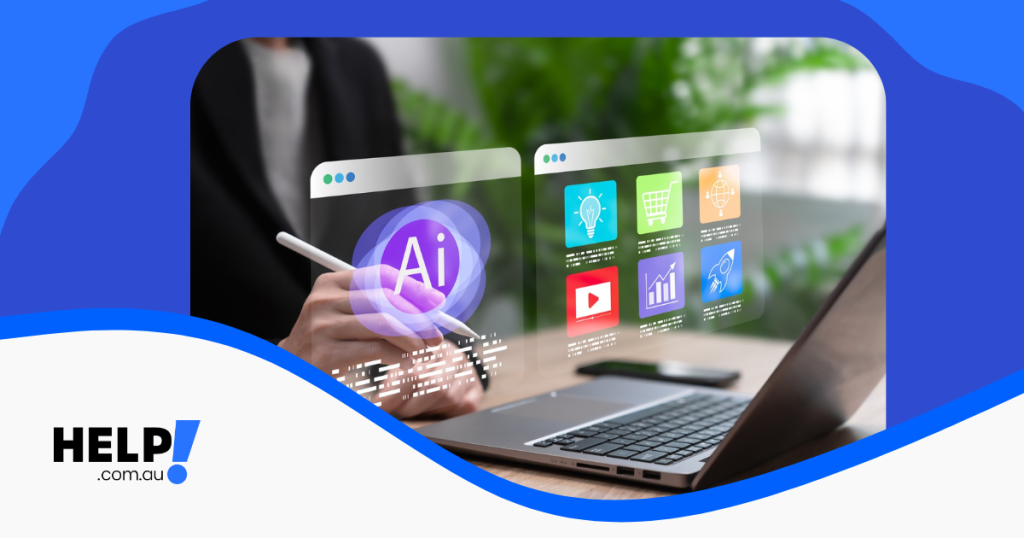
AI search is reshaping how people discover information online. Instead of simply displaying a list of links, AI-powered search tools use large language models to understand questions and provide direct, summarised answers. These answers are built by analysing and citing trusted, high-quality websites.
As a result, websites that are clear, well-structured, accurate, and credible are far more likely to be referenced in AI-generated responses. This is where the idea of a “smart website” comes in, but that doesn’t mean a website defined by flashy technology. It means how well the website is communicating with both technology and humans.
What Is AI Search?
AI search goes beyond traditional keyword-based results. Rather than forcing users to click through multiple pages, AI search tools aim to answer questions directly and use a conversational tone.
These tools understand the flow of natural human language and can pull together information from multiple sources, summarise key points, and reference the websites they trust most. AI-powered assistants, conversational search platforms, and generative answer engines all fall into this category.
This shift changes not only how users interact with AI search, but also which kinds of content perform best online.
How AI Search Finds and Uses Website Content
AI systems look for strong signals that a website is easy to understand and reliable. Clear language helps reduce confusion, accurate information builds confidence, and structured layouts make it easier for AI to interpret the meaning and intention of each website page.
Trust also plays a major role. Websites that demonstrate legitimacy through real business details, policies, and up-to-date content are easier for AI to summarise and cite. When content is well organised and consistent, AI can confidently reuse it in a generated answer to a consumer’s search query.
What Makes a Website Smart?
A smart website isn’t defined by the tools behind it. A smart website has content that clearly and effectively explains what the business, services, products, or information source is all about. This enables AI to use the content for question-and-answer responses.
Smart websites use plain language, follow consistent layouts, and guide visitors logically from one topic to the next. They answer real questions clearly, link related information together from other pages on their site, and are built for owners to make easy updates to content and images when required.
This clarity and structure enable websites to perform well using both traditional search engines and AI-driven discovery tools.
The Core Elements of an AI-Search-Friendly Website
Clear Page Purpose
Help.com.au recommends that every page should have a single, obvious goal. Pages that try to rank for multiple unrelated topics or hide important information behind marketing jargon create confusion, not just for users, but also for AI. AI search tools prefer pages where the main intent is immediately clear and focused on answering one primary question.
Structured, Scannable Content
Structure plays a huge role in how AI understands and scans content. Pages with clear headings, logical sections, bullet points for lists, and FAQs for common questions are far easier to interpret and summarise. When content follows a predictable structure, both humans and machines can extract meaning quickly and accurately.
Direct, Helpful Answers
AI tools prioritise pages that get to the point. Clear, concise answers that avoid vague claims and unnecessary filler text are more likely to be referenced easily. If a human can understand your message within seconds, an AI system can too. Simplicity and consistency win!
Strong Trust Signals
Trust that your content is authentic matters more than keyword density. AI systems look for signs that a website represents a real, credible business or organisation. Clear contact details, privacy and terms policies, genuine reviews or testimonials, and regularly updated content all help establish legitimacy. These signals reassure AI that your information is safe to reuse.
Internal Links and Context
Context helps AI understand how different pieces of information relate to each other. Strong internal linking connects related pages, reinforces consistent terminology, and avoids isolated or “orphan” content. Over time, this creates a clear knowledge structure that AI can follow and interpret with confidence.
AI Search and SEO: Not a Replacement
AI search doesn’t replace traditional Search Engine Optimisation (SEO), but rather builds on it. Websites that already follow best practices for SEO, such as clear structure, useful content, and good user experience, are far better positioned to adapt to AI-driven discovery. The fundamentals still matter. AI simply rewards websites that apply them well.
Common Myths About AI Search
One common misconception is that AI will replace websites entirely. In reality, AI still relies on high-quality source material, and therefore, websites remain essential. Another myth is that only big brands will appear in AI results. In practice, clarity, usefulness, and accuracy often matter more than brand size. There’s also the idea that more content is better, but the truth is, focused and well-maintained pages consistently outperform large volumes of thin or repetitive content.
How to Prepare Your Website for AI Search
Start by reviewing your existing pages. Ask what question each page needs to answer, and then whether that answer is logical and clear, not outdated, or confusing. From there, improve structure by adding meaningful headings, breaking up long paragraphs, and introducing FAQs where appropriate. Strengthen trust by clearly displaying contact details, publishing policies, and showing real-world proof of your business. Finally, keep content fresh. Regular updates signal reliability and help AI systems feel confident in using your information.
How Help.com Supports Smarter Websites
Help.com.au focuses on making websites easier to build, understand, and manage. Our platform encourages clear, structured content, reduces complexity for business owners, and supports visibility across both traditional search engines and AI-powered tools. Our goal is to support new and small to medium-sized business owners get online fast using advanced technology and human expertise!
Frequently Asked Questions
What is AI search in simple terms?
AI search answers questions directly by summarising information from trusted websites, rather than only displaying a list of links.
How do I optimise my website for AI search?
Focus on clear structure, direct answers, trust signals, and accurate, up-to-date content. FAQs and structured layouts also help.
Does structured data guarantee AI visibility?
No, but it improves clarity and machine readability, which increases the likelihood of being understood and cited.
Is AI search replacing SEO?
No. SEO fundamentals still matter. AI search builds on strong SEO rather than replacing it.
Do I need technical skills to prepare for AI search?
Not necessarily. Many improvements relate to content clarity, structure, and trust—not complex development.
 Domains
 Company